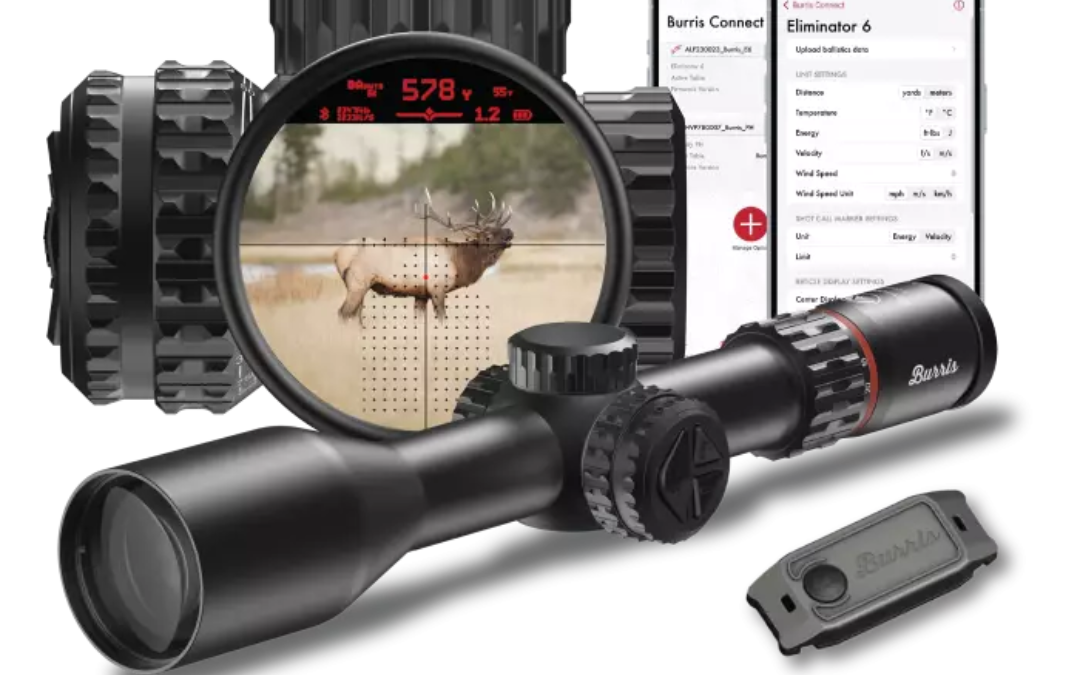
Choosing the right rifle scope can feel overwhelming, especially with so many options available today. Magnification ranges, objective lens sizes, reticle styles, turret systems, focal planes, illumination, eye relief, and mounting requirements all matter. The right optic can make your rifle more accurate, more comfortable to shoot, and better suited for the type of hunting, range work, or tactical use you have in mind.
At Harts Gun & Optics, we believe the best scope is not always the most expensive one. The best scope is the one that matches your rifle, your shooting distance, your environment, and your skill level. A long-range precision scope may be a poor choice for close-range hunting. A lightweight hunting optic may not be ideal for dialing repeated adjustments at the range. A budget scope may work fine for casual shooting, but may not hold up under heavy recoil or rough field use.
This guide will help you understand what really matters when choosing a scope so you can make a smarter, more confident decision.
Start With the Purpose of the Rifle
Before looking at brands, prices, or magnification numbers, start with one simple question:
What will this rifle be used for most often?
Your answer should guide every optic decision that follows. A rifle used for hunting whitetail in thick woods needs a different scope than a rifle built for long-range target shooting. A lightweight AR used for recreational shooting may need a different optic than a bolt-action rifle chambered for a magnum hunting round.
Common rifle scope applications include:
- Deer and hog hunting
- Predator hunting
- Long-range target shooting
- Competition shooting
- AR-style rifle setups
- Rimfire training
- Big game hunting
- General-purpose range use
- Defensive or duty-style carbine setups
A good scope should make your rifle easier to use, not heavier, slower, or more complicated than necessary.
Understand Scope Numbers
Most scopes are labeled with numbers such as 3-9×40, 4-16×50, or 1-8×24.
The first set of numbers tells you the magnification range. For example, a 3-9×40 scope can be adjusted from 3x magnification to 9x magnification. The final number, 40, refers to the objective lens diameter in millimeters.
A 4-16×50 scope has 4x to 16x magnification and a 50mm objective lens. A 1-8×24 scope has 1x to 8x magnification and a 24mm objective lens.
Here is what that means in plain language:
- Lower magnification gives you a wider field of view and faster target acquisition.
- Higher magnification helps you see smaller targets or targets at longer distances.
- Larger objective lenses can help gather more light, but they also add size, weight, and may require taller scope rings.
More magnification does not automatically mean a better scope. In many real-world situations, too much magnification can make it harder to find your target quickly.
Match Magnification to Your Shooting Distance
Magnification is one of the most important choices when buying a scope. The right amount depends on how far you plan to shoot and what kind of target you need to see.
Close Range: 0 to 100 Yards
For close-range shooting, low magnification is usually best. A scope in the 1-4x, 1-6x, 1-8x, or 2-7x range works well for fast target acquisition and wider field of view.
This type of setup is common for:
- AR-style rifles
- Hog hunting
- Brush hunting
- Short-range deer hunting
- Defensive carbines
- General-purpose range rifles
Low power variable optics, often called LPVOs, are popular because they can act almost like a red dot at low power while still offering magnification for longer shots.
Medium Range: 100 to 300 Yards
For most hunters and recreational shooters, a scope in the 3-9x, 2.5-10x, or 3-12x range is extremely practical. This is one of the most versatile categories because it gives you enough magnification for common hunting distances without making the rifle too bulky.
This range is ideal for:
- Deer hunting
- General rifle hunting
- Range shooting
- Ranch rifles
- Lightweight bolt-action rifles
- Entry-level hunting setups
A quality 3-9×40 scope is still one of the most useful optic choices ever made. It is simple, effective, and appropriate for many common rifles.
Long Range: 300 Yards and Beyond
If you plan to shoot at longer distances, you may want more magnification and better adjustment features. Scopes in the 4-16x, 5-25x, 6-24x, or similar ranges are common for precision shooting.
These optics are often used for:
- Long-range target shooting
- Precision rifle builds
- Varmint hunting
- Competition shooting
- Heavy-barreled bolt-action rifles
- Calibers such as 6.5 Creedmoor, .308 Winchester, and similar long-range cartridges
At longer distances, features such as repeatable turrets, parallax adjustment, reticle holdovers, and optical clarity become much more important.
Consider Field of View
Field of view is how much area you can see through the scope at a given distance. As magnification increases, field of view usually decreases.
This matters more than many new shooters realize.
A wide field of view helps you:
- Find the target faster
- Track moving animals
- Stay aware of your surroundings
- Recover quicker after recoil
- Shoot more comfortably at close range
A narrow field of view can make it harder to locate the target, especially if the animal is moving or partially hidden. This is why a high-power scope is not always the best choice for hunting in woods, brush, or tight terrain.
For close-range and medium-range hunting, do not chase maximum magnification. Choose a scope that gives you enough power while still allowing fast target acquisition.
Choose the Right Objective Lens Size
The objective lens is the front lens of the scope. Common sizes include 24mm, 32mm, 40mm, 44mm, 50mm, and 56mm.
A larger objective lens can help with light transmission and image brightness, especially at higher magnification. However, it also comes with tradeoffs.
Larger objective lenses can:
- Add weight
- Require taller scope rings
- Raise your cheek weld
- Make the rifle feel bulkier
- Be less practical for field carry
For most hunting rifles, a 40mm to 44mm objective lens is a very practical choice. It keeps the scope manageable while still offering good light performance.
For low-light hunting or long-range precision shooting, a 50mm or 56mm objective may make sense. Just remember that bigger is not automatically better. A high-quality 40mm scope can outperform a cheap 50mm scope in real-world clarity, durability, and usability.
Reticle Choice Matters
The reticle is the aiming pattern inside the scope. Some are simple crosshairs. Others include hash marks, holdover points, windage references, illuminated centers, or complex grid systems.
The right reticle depends on how you shoot.
Duplex Reticle
A duplex reticle is one of the simplest and most popular options. It usually has thicker outer lines that narrow toward the center.
Best for:
- Deer hunting
- General-purpose rifles
- New shooters
- Simple setups
- Short to medium distances
A duplex reticle is easy to see, fast to use, and does not clutter your sight picture.
BDC Reticle
BDC stands for bullet drop compensating. These reticles include aiming points below the center crosshair to help estimate bullet drop at longer distances.
Best for:
- Hunting
- AR rifles
- Recreational shooting
- Shooters who do not want to dial turrets often
BDC reticles can be useful, but they are not magic. Their accuracy depends on your caliber, bullet weight, velocity, zero distance, and environmental conditions. Always confirm your holdovers at the range.
MOA and MRAD Reticles
MOA and MRAD reticles are designed around angular measurements. These are commonly used for precision shooting because they allow the shooter to hold for elevation and wind more accurately.
Best for:
- Long-range shooting
- Precision rifles
- Competition
- Shooters who understand ballistic data
- Dialing and holding corrections
The most important rule is to match your reticle and turret system. If your reticle is MOA, use MOA turrets. If your reticle is MRAD, use MRAD turrets. Mixing systems can make adjustments more confusing.
Illuminated Reticles
Illuminated reticles can help in low light, shaded woods, dark backgrounds, or fast shooting situations. Illumination is especially useful on LPVOs and hunting optics.
Best for:
- Hog hunting
- Low-light deer hunting
- Tactical-style carbines
- Fast close-range shooting
- Dark or busy backgrounds
Illumination should support the reticle, not overpower it. A bright, clean center dot or illuminated crosshair can be useful, but too much illumination can wash out your sight picture.
First Focal Plane vs Second Focal Plane
Focal plane is one of the most misunderstood scope features.
Second Focal Plane
In a second focal plane scope, the reticle appears the same size as you adjust magnification. This is common on traditional hunting scopes.
Pros:
- Reticle stays easy to see at all magnifications
- Usually simpler to use
- Often more affordable
- Great for hunting and general use
Cons:
- Holdover marks are usually accurate only at one specific magnification, often max power
Second focal plane scopes are excellent for most hunters and recreational shooters.
First Focal Plane
In a first focal plane scope, the reticle changes size as you adjust magnification. The reticle grows as you increase power and shrinks as you decrease power.
Pros:
- Holdovers remain accurate at any magnification
- Better for precision shooting
- Useful for ranging and wind holds
- Popular for long-range and competition setups
Cons:
- Reticle can look very small at low power
- Often more expensive
- May be unnecessary for basic hunting
First focal plane scopes are great tools when the shooter understands how to use them. For many hunters, however, a second focal plane scope is simpler and more practical.
Do Not Ignore Eye Relief
Eye relief is the distance between your eye and the rear lens of the scope where you can see a full image. This is especially important on rifles with heavier recoil.
Too little eye relief can lead to discomfort and, in some cases, the scope can hit the shooter under recoil. This is sometimes called “scope bite.”
For heavy-recoiling rifles, look for generous eye relief and make sure the scope is mounted properly. A comfortable scope position helps you shoot more consistently and safely.
Eye relief is also important for:
- Magnum rifles
- Lightweight hunting rifles
- Shotguns
- Lever-action rifles
- AR platforms with specific stock positions
A scope that looks great on paper may still be a poor fit if the eye relief does not work with your rifle and shooting position.
Understand Parallax Adjustment
Parallax happens when the reticle and target image are not perfectly aligned on the same focal plane. At longer distances or higher magnification, parallax error can cause the reticle to appear to shift if your eye moves behind the scope.
Many hunting scopes have fixed parallax, often set around 100 yards. That is usually fine for common hunting distances.
Scopes designed for precision shooting often include a side parallax adjustment knob or adjustable objective. This allows the shooter to fine-tune the image and reduce parallax error at different distances.
Parallax adjustment is especially useful for:
- Long-range shooting
- Rimfire precision
- Varmint hunting
- High magnification scopes
- Target shooting from fixed positions
For basic deer hunting, parallax adjustment may not be necessary. For precision shooting, it can be very important.
Turrets: Capped vs Exposed
Turrets are the adjustment knobs used to change elevation and windage. Some scopes have capped turrets, while others have exposed tactical-style turrets.
Capped Turrets
Capped turrets are covered by protective caps. Once you zero your rifle, the caps help prevent accidental adjustments.
Best for:
- Hunting rifles
- Simple setups
- Field use
- Shooters who use reticle holdovers instead of dialing
Capped turrets are practical, reliable, and low-maintenance.
Exposed Turrets
Exposed turrets are designed for quick adjustments without removing caps. These are common on precision and long-range scopes.
Best for:
- Long-range shooting
- Competition
- Precision rifle builds
- Shooters who dial elevation and windage
If you plan to dial adjustments often, look for turrets that track reliably, have clear markings, and return to zero consistently.
Scope Durability and Build Quality
A scope is more than glass and magnification. It also needs to survive recoil, weather, rough handling, and repeated use.
Look for features such as:
- Shock resistance
- Waterproof construction
- Fogproof performance
- Durable tube construction
- Quality lens coatings
- Reliable turret tracking
- Solid warranty support
- Reputable manufacturer history
A cheap scope may work fine at first, but poor tracking, weak internal components, or poor glass quality can become frustrating over time. If the optic cannot hold zero, it does not matter how clear it looks in the store.
For serious hunting, defensive use, or long-range shooting, durability matters.
Do Not Forget the Mount
Even the best scope can perform poorly if it is mounted incorrectly. Rings, bases, and mounts are not the place to cut corners.
A proper mount should:
- Fit the rifle
- Match the scope tube diameter
- Provide the correct height
- Hold zero under recoil
- Allow proper eye relief
- Keep the scope level
- Be torqued to the correct specifications
Common scope tube sizes include 1 inch, 30mm, and 34mm. Make sure your rings match your scope tube.
For AR-style rifles, one-piece cantilever mounts are often used to place the scope in the correct forward position. For bolt-action rifles, traditional rings and bases are common.
Professional mounting can save a lot of frustration. A scope that is crooked, too high, too low, or improperly torqued can make accurate shooting much harder.
Budget: Spend Where It Matters
There is no single perfect price point for every shooter. However, it is smart to match the scope budget to the rifle, the use case, and the expectations.
For casual range use, an entry-level optic may be enough. For hunting, step up into a scope with better glass, better durability, and better low-light performance. For long-range precision, invest in reliable tracking, high-quality turrets, better glass, and a reticle system that supports your shooting style.
A good rule of thumb:
- Basic range rifle: simple, reliable, budget-friendly optic
- Hunting rifle: better glass, good low-light performance, durable construction
- AR carbine: LPVO, prism optic, or red dot depending on intended use
- Long-range rifle: quality turrets, parallax adjustment, precision reticle, strong tracking
- Magnum rifle: generous eye relief and rugged build quality
Do not buy a scope just because it has the highest magnification or the biggest objective lens. Buy the scope that solves your actual shooting problem.
Common Scope Buying Mistakes
Many shooters make the same mistakes when buying optics. Avoid these and you will be ahead of the curve.
Mistake 1: Buying Too Much Magnification
More power is not always better. Too much magnification can reduce field of view, add weight, and make close-range shooting slower.
Mistake 2: Ignoring the Rifle’s Purpose
A heavy precision scope may not belong on a lightweight woods rifle. A simple hunting scope may not be enough for serious long-range dialing.
Mistake 3: Choosing the Wrong Reticle
A complex reticle can be useful, but only if you know how to use it. For many hunters, a clean, simple reticle is faster and more effective.
Mistake 4: Forgetting About Mounting Height
A large objective lens may require taller rings, which can hurt cheek weld and shooting comfort.
Mistake 5: Prioritizing Features Over Quality
A scope loaded with features is not always better than a simpler scope with better glass, stronger construction, and reliable tracking.
Mistake 6: Not Confirming Zero at the Range
No matter what scope you buy, you must zero it properly and confirm performance with your rifle, ammo, and shooting distance.
Best Scope Types by Use Case
Best for Deer Hunting
A 3-9×40, 2.5-10x, or 3-12x scope is a great choice for most deer hunters. Look for good low-light clarity, a simple reticle, durable construction, and comfortable eye relief.
Best for Hog Hunting
For hog hunting, especially in lower light or closer ranges, consider an illuminated reticle or LPVO. A 1-6x, 1-8x, or similar optic can work very well for fast target acquisition.
Best for AR-Style Rifles
For AR platforms, LPVOs are extremely popular because they offer speed at low magnification and flexibility at distance. A 1-6×24 or 1-8×24 is a strong general-purpose choice.
Best for Long-Range Shooting
For precision and long-range shooting, consider a scope in the 4-16x, 5-25x, or 6-24x range with exposed turrets, parallax adjustment, and an MOA or MRAD reticle.
Best for Rimfire Rifles
For rimfire rifles, especially .22 LR, consider a scope with adjustable parallax or rimfire-specific parallax settings. Rimfire shooting often happens at shorter distances, so a scope designed for centerfire rifles may not always be ideal.
Best for Lightweight Hunting Rifles
For mountain rifles or field rifles carried long distances, prioritize weight, durability, and simplicity. A compact 2-7x, 3-9x, or 2.5-10x can be a better choice than a large, heavy scope.
Final Checklist Before Buying a Scope
Before choosing your optic, ask these questions:
- What rifle is the scope going on?
- What caliber will I be shooting?
- What distances will I shoot most often?
- Will I be hunting, target shooting, competing, or using it for general range work?
- Do I need fast target acquisition or high magnification?
- Will I be shooting in low light?
- Do I need a simple reticle or a precision reticle?
- Do I plan to dial turrets or use holdovers?
- Do I need parallax adjustment?
- Will the scope mount comfortably on my rifle?
- Is the scope durable enough for my recoil level and environment?
- Does the optic fit my budget without sacrificing reliability?
If you can answer these questions clearly, choosing the right scope becomes much easier.
Get the Right Scope for Your Rifle at Harts Gun & Optics
The right scope can completely change how a rifle performs. It can make your setup faster, more accurate, more comfortable, and more enjoyable to shoot. The wrong scope can make even a good rifle feel frustrating.
At Harts Gun & Optics, we help customers choose optics based on real-world use, not just numbers on a box. Whether you need a hunting scope, an LPVO for your AR, a precision optic for long-range shooting, or help understanding reticles and mounts, we can help you find the right fit.
Visit HartsGunAndOptics.com or contact our team for expert advice on choosing the best optic for your rifle, shooting style, and budget.
Harts Gun & Optics: helping shooters find the right gear, the right setup, and the confidence to use it well.