Buying the Right Rifle Scope in 2026
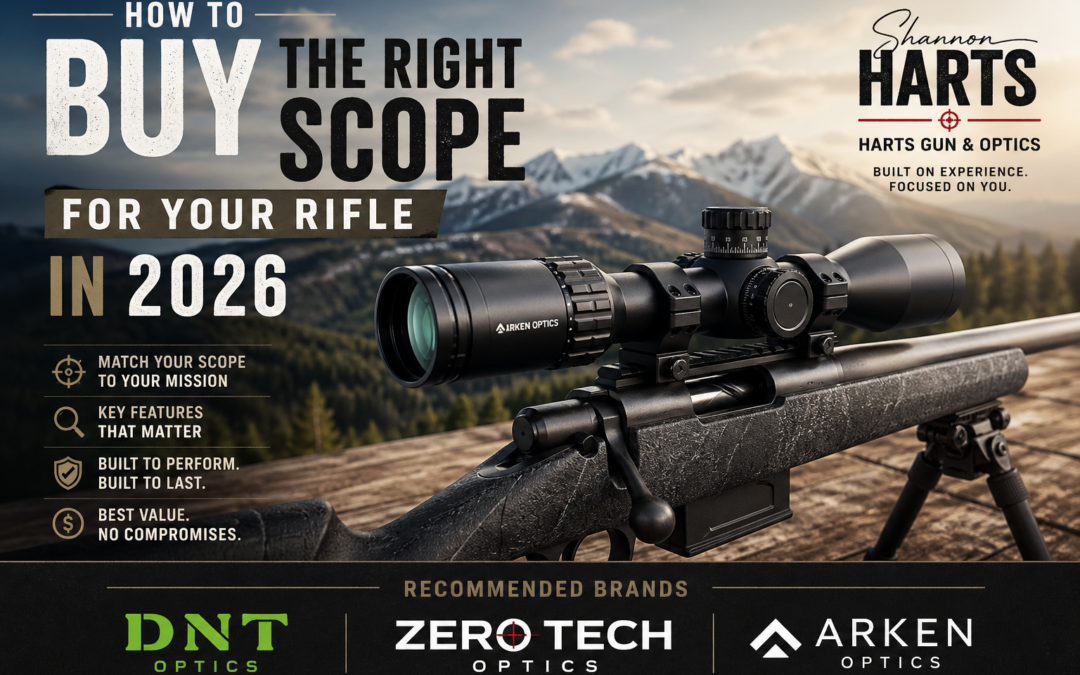
Choosing the perfect optic today is not about chasing the highest magnification—it’s about matching the scope to the rifle’s real job. Buying the Right Rifle Scope in 2026 means understanding how optical clarity, turret precision, durability, and usability all come together in one cohesive system.
Modern shooters face a paradox: more choices than ever, yet more confusion than necessary. From traditional hunting glass to advanced digital optics, the market has exploded with innovation. Still, the fundamentals remain stubbornly unchanged—clarity, reliability, and proper fit always win.
Interestingly, many buyers still fall into the same trap: overestimating magnification and underestimating usability. A 7-35x scope might sound impressive, but if it’s mounted on a lightweight hunting rifle, it quickly becomes a burden rather than an asset.
Understanding Rifle Scope Components in Buying the Right Rifle Scope in 2026
A rifle scope is more than a tube with lenses—it’s a precision instrument. Each component plays a role in accuracy and performance.
The main tube (30mm or 34mm) affects internal adjustment range. Larger tubes typically allow more elevation travel, which matters for long-range shooting. The objective lens determines how much light enters the scope, influencing brightness and clarity, especially at dawn or dusk.
Turrets control windage and elevation adjustments. High-quality turrets provide tactile, repeatable clicks—something serious shooters rely on. Meanwhile, the reticle acts as your aiming reference, and its design can dramatically impact shooting efficiency.
Oddly enough, even experienced shooters sometimes overlook ergonomics. If a scope is difficult to adjust or uncomfortable to use, performance suffers—simple as that.
Optical Quality and Glass Clarity in Buying the Right Rifle Scope in 2026
Glass quality is where good scopes separate from great ones. Premium optics use ED (Extra-low Dispersion) glass, reducing chromatic aberration and improving color fidelity.
Coatings also matter. Fully multi-coated lenses increase light transmission, reduce glare, and enhance contrast. In practical terms, this means better target identification in low-light conditions.
A surprising contradiction appears here: some mid-range scopes now rival high-end optics in daylight clarity. However, under challenging conditions—fog, rain, twilight—the premium glass still pulls ahead.
In essence, clarity is not just about seeing—it’s about seeing clearly when it matters most.
Magnification Myths in Buying the Right Rifle Scope in 2026
Here’s the blunt truth: more magnification is not always better.
High magnification narrows the field of view, reduces brightness, and exaggerates movement. For hunting, anything beyond 18x is often unnecessary. For tactical shooting, lower magnification improves speed and situational awareness.
Many shooters buy 30x scopes and rarely use them above 15x. Why? Because mirage, wobble, and lighting conditions make extreme magnification impractical.
So, instead of asking “How much zoom do I need?” ask “What distance will I realistically shoot?”
Reticle Systems in Buying the Right Rifle Scope in 2026
Reticles come in two main types: First Focal Plane (FFP) and Second Focal Plane (SFP).
FFP reticles scale with magnification, maintaining accurate holdovers at any zoom level. They are ideal for precision shooting. SFP reticles remain constant in size, making them easier to see but only accurate at specific magnifications.
Each has its place. Hunters often prefer SFP for simplicity, while long-range shooters lean toward FFP for versatility.
Turrets and Adjustments in Buying the Right Rifle Scope in 2026
Turrets are the mechanical heart of a scope. Reliable tracking ensures that each click translates into precise movement.
Zero stop features prevent over-adjustment, allowing shooters to return to baseline quickly. Dialing systems are crucial for long-range shooting, while capped turrets are better suited for hunting.
A poorly designed turret system can ruin an otherwise excellent scope—no exaggeration.
Best Rifle Scope Types in Buying the Right Rifle Scope in 2026
Hunting Scopes
- Lightweight
- Low magnification range
- Bright optics for low light
Precision Scopes
- High magnification
- Advanced reticles
- Large adjustment range
LPVO (Low Power Variable Optics)
- True 1x capability
- Ideal for AR platforms
- Fast target acquisition
Digital and Night Scopes
- Integrated sensors
- Night vision capability
- Advanced features like rangefinding
Brand Comparison in Buying the Right Rifle Scope in 2026
The modern market highlights three strong contenders:
- ZeroTech: Known for clear warranty terms and durability
- Arken: Strong value and feature-rich options
- DNT: Innovation in digital optics and precision scopes
Each brand caters to different users. The choice depends less on brand loyalty and more on intended use.
Mounting and Setup in Buying the Right Rifle Scope in 2026
Even the best scope fails if mounted incorrectly.
- Use proper torque settings
- Ensure correct eye relief
- Choose the right mount type
Cantilever mounts work best for AR rifles, while bolt-action rifles benefit from traditional ring setups.
Zeroing Techniques in Buying the Right Rifle Scope in 2026
Zeroing is where theory meets reality.
Start with bore sighting, then confirm with live fire. Adjust based on groupings, not individual shots. Consistency is key.
Digital optics simplify this process, but traditional methods remain reliable and widely used.
Common Mistakes in Buying the Right Rifle Scope in 2026
- Overbuying magnification
- Ignoring weight
- Choosing the wrong reticle
- Cheap mounting systems
- Skipping proper zeroing
These mistakes are surprisingly common—and avoidable.
Future Trends in Buying the Right Rifle Scope in 2026
The future is leaning toward integration:
- Smart optics with ballistic calculators
- Improved digital night vision
- Lightweight materials with higher durability
Technology is advancing fast, but fundamentals still matter most.
FAQs About Buying the Right Rifle Scope in 2026
What magnification is best for hunting?
Typically between 3x and 18x, depending on terrain.
Is FFP better than SFP?
It depends—FFP for precision, SFP for simplicity.
How much should I spend on a scope?
Allocate at least 30–50% of your rifle budget.
Are digital scopes worth it?
Yes, especially for night hunting and advanced features.
What is the most important feature?
Optical clarity and reliability.
Do I need a 34mm tube?
Only if you require extra adjustment for long-range shooting.
Conclusion: Final Thoughts on Buying the Right Rifle Scope in 2026
Buying the Right Rifle Scope in 2026 is less about chasing specs and more about understanding purpose. The perfect scope is not the most expensive or the most powerful—it’s the one that fits your rifle, your environment, and your shooting style.
In the end, clarity beats complexity, reliability beats hype, and practical performance beats marketing claims—every single time.
For deeper technical comparison and detailed data, refer to the original analysis which provides a comprehensive breakdown of current scope models and their real-world performance.